A slow crank in the morning is one of those problems that feels minor until it leaves you late. The engine eventually starts, so it’s easy to tell yourself it was a fluke or the weather. Most of the time, it’s the early warning that your battery, cables, or starter are losing their edge.
If you catch the pattern now, you usually avoid the no-start day later.
What Slow Cranking Usually Means
Slow cranking means the starter is not getting enough usable power, or it’s taking more power than it should to turn the engine. The battery might be weak, the wiring might be resisting current flow, or the starter motor could be wearing out. Any of those can still allow the car to start, just not as confidently.
It also matters if it’s only in the morning. When the car sits overnight, the battery voltage settles, temperatures drop, and any weak link becomes more obvious. That’s why the first start of the day is often the one that exposes the issue.
Battery Age And Cold Weather Weakness
Batteries lose cranking power as they age, even if they still pass casual day-to-day use. Cold mornings make this worse because batteries produce less power in lower temperatures, and engine oil is thicker, so the starter has to work harder. The combination makes a borderline battery suddenly feel bad.
Short trips can speed this up. If you do a lot of quick starts and short drives, the alternator will not have enough time to fully replenish what was used. Regular maintenance helps here because a battery test can show reduced capacity before you’re stuck asking for a jump.
Corroded Cables And Poor Connections
A battery can be in decent shape and still crank slowly if the power can’t move cleanly through the cables. Corrosion on terminals, loose clamps, and damaged cable ends add resistance. That resistance acts like a bottleneck, and the starter motor ends up starving for current.
This problem can be sneaky because it’s not always visible at a glance. Corrosion can hide under the terminal, inside the cable end, or at the ground connection point. We’ve seen plenty of slow-crank complaints solved by cleaning and tightening the right connections, not by replacing the battery.
Starter Motor Wear And Heat-Soak Confusion
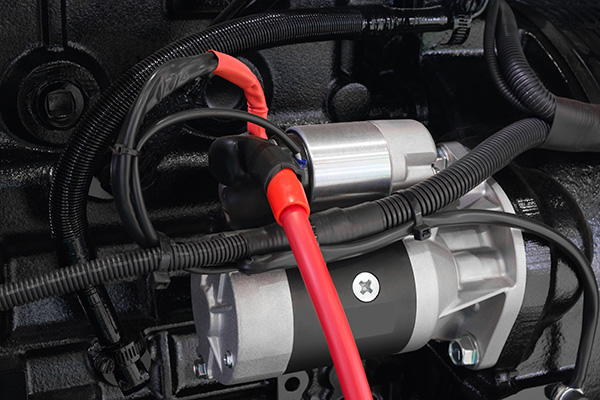
Starter motors wear out over time. Brushes wear down, internal contacts degrade, and the motor can start pulling more current while producing less torque. Early on, it can sound like a slower, heavier crank that still starts the engine.
Some people assume starter issues only show up when the engine is hot, but that’s not always true. A weak starter can struggle cold because the engine takes more effort to turn. If you hear a single click with no crank sometimes, that can also point toward starter solenoid or internal contact wear.
Charging System Problems That Show Up Overnight
If the alternator isn’t charging properly, the battery may never be fully topped off. The car can start fine after a longer drive, then crank the next morning slowly because the battery was undercharged overnight. That pattern makes people blame the battery first, which is understandable.
Charging problems can come from the alternator itself, belt slip, or wiring issues between the alternator and battery. A quick output test usually makes this clear. If headlights seem dimmer at idle or electronics act odd during startup, it’s worth checking charging health sooner.
Parasitic Drain That Leaves The Battery Tired By Morning
Sometimes the battery and charging system are fine, but something is drawing power while the car is off. A glove box light, a stuck relay, or an accessory that stays on overnight can drain enough power to cause slow cranking in the morning.
This tends to show a specific pattern. You might get a slow crank after the car sits longer than usual, like over a weekend, or you might notice it happens more after charging a device in the car. Finding a parasitic draw is very doable, but it requires testing instead of guessing.
Quick Checks Before You Book Service
You don’t need tools to gather helpful clues. Focus on repeatable patterns and simple observations that make the next step faster.
- Notice if slow cranking happens only after the car sits overnight or also after short stops
- Watch whether interior lights or headlights look dim during the slow crank
- Pay attention to whether the cranking speed improves after a longer drive
- Note any new clicking sounds or delays before the starter begins turning
If the cranking speed is getting noticeably slower week to week, move it up your list. A battery or starter rarely improves on its own.
How We Pinpoint The Cause Without Parts Swapping
A proper inspection starts with battery testing under load, then checking the charging system output and looking for voltage drop across the cables and grounds. That voltage drop check is where a lot of answers come from, because it reveals whether the starter is being properly fed. Our technicians also listen to the starter’s sound and compare it to what the numbers show, since sound and data together paint a clearer picture.
If the battery and charging system test well, we’ll check for parasitic draw and isolate the circuit that’s staying awake. That’s the cleanest way to stop the cycle without replacing parts that are still healthy.
Get Battery And Starting System Service In Reading, PA With Auto Pro
Auto Pro in Reading, PA, can test your battery, cables, starter, and charging output to pinpoint why your car cranks slowly in the morning and recommend the right fix.
Schedule a visit and get dependable starts back.