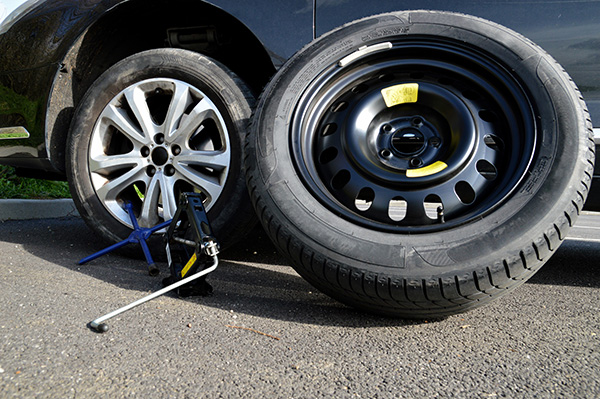
Lug nuts look simple, but they live in one of the harshest parts of the car. They are constantly exposed to water, road salt, brake dust, dirt, temperature changes, and repeated wheel removal. Over time, that combination can make them rust, swell, seize onto the studs, or become difficult to fit with a normal socket.
When that happens, a basic tire rotation or flat-tire change can become a much bigger job. The lug nut may round off, the stud can snap, or the threads can be damaged while someone tries to force the hardware loose. Once we see corrosion starting, we pay attention to both the lug nuts and the studs behind them.
Road Salt Is One of the Biggest Causes of Corrosion
Salt used on winter roads speeds up corrosion anywhere bare or damaged metal is exposed. Lug nuts, wheel studs, and the wheel mounting area take a lot of abuse because they sit directly in the spray coming off the tires.
Moisture and salt can work their way into the threads and remain there long after the road looks dry. Over several winters, rust builds between the stud and lug nut. That extra resistance is why some lug nuts feel far tighter coming off than they ever did going on.
Two-Piece Lug Nuts Can Swell
Some vehicles use lug nuts with a steel core covered by a thin decorative metal cap. They look clean when new, but corrosion can develop underneath that outer shell.
As rust expands between the layers, the cap can bulge outward. The lug nut may then measure slightly larger than the socket size stamped in the tool kit. You push the socket on, and it will not fit, or it jams so tightly that getting the socket back off becomes a struggle. We see this often enough that swollen lug nuts are easy to recognize once the socket stops fitting normally.
Improper Tools Can Damage the Corners
An impact gun is useful, but the wrong socket or poor technique can quickly damage lug nuts. A loose-fitting socket rounds the corners, especially when high torque is applied.
Chrome decorative caps can also deform if you hammer the socket on or use it at an angle. Once the corners are rounded, future removal gets harder because the tool has less surface area to grip. During an inspection, we look for distorted nuts before a routine wheel service turns into an extraction job.
Overtightening Can Damage the Studs
Wheel studs are designed to stretch slightly when the lug nuts are tightened to the correct torque. That clamping force holds the wheel securely against the hub.
If you repeatedly tighten a lug nut far beyond specification, the stud can stretch too much. Threads can deform, the stud can weaken, or the lug nut can become extremely difficult to remove later. That is why final tightening with a torque wrench matters. More force does not make the wheel safer once you reach the correct clamping load.
Cross-Threading Can Lock the Lug Nut in Place
A lug nut should thread onto the stud easily by hand for the first several turns. If it starts crooked and you use an impact gun to drive it down anyway, the threads can be damaged almost immediately.
You may not notice the problem until the next tire service. The nut can bind partway off, bring pieces of damaged thread with it, or snap the stud entirely. At our shop, if a lug nut doesn't start cleanly by hand, we stop and check the threads rather than force it.
Corrosion Can Affect the Wheel Mounting Surface Too
Lug nuts aren't the only parts that rust. Corrosion can build between the wheel and hub, especially on vehicles with aluminum wheels mounted against steel or iron components.
That corrosion can make the wheel stick to the hub even after you remove every lug nut. It can also create an uneven mounting surface if heavy buildup remains. Before reinstalling a wheel, we check the hub face and mating surface so the wheel sits flat and the lug nuts clamp it evenly.
Watch for Hardware That No Longer Looks Right
Damaged wheel hardware is easier to deal with before you are stranded with a flat tire. If the factory tire tool no longer fits the lug nuts or several of them look badly rusted, replacement may be smarter than waiting until removal becomes impossible.
Warning signs include:
- Sockets no longer fitting correctly
- Rounded lug nut corners
- Heavy rust on exposed studs
- Threads that feel rough by hand
- Lug nuts that bind while coming off
- Studs that look stretched or damaged
- A wheel that stays stuck after the nuts are removed
Catching these signs during regular maintenance can save a lot of frustration later.
Damaged Studs and Lug Nuts Should Be Replaced
If threads are badly damaged or a stud has been stretched, reusing the hardware isn't worth the risk. A lug nut needs clean threads and the correct seating surface to hold the wheel properly.
We also make sure replacement lug nuts match the wheel. Different wheels can use different seat shapes, thread pitches, and lengths. Installing something that happens to screw onto the stud does not mean it is the right hardware for that wheel.
Get Wheel Stud and Lug Nut Service In Reading, PA, With Auto Pro
If your lug nuts are swollen, rusted, rounded, or becoming difficult to remove, Auto Pro in Reading, PA, can check the wheel studs, threads, lug nut condition, and wheel mounting surfaces before the hardware fails during a tire service.
Schedule a wheel hardware check before corrosion or damaged threads turn a simple tire change into a broken-stud repair.