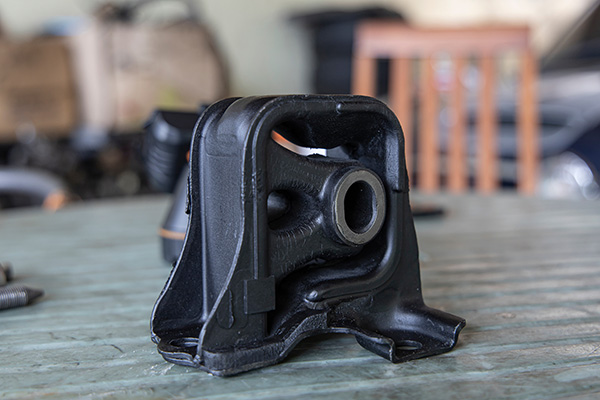
Engine mounts spend years absorbing movement that most drivers never notice. They hold the engine and transmission in position while keeping normal vibration from traveling through the floor, steering wheel, seats, and dashboard. As the rubber ages or a hydraulic mount begins to leak, that isolation gradually disappears.
Because the change develops slowly, a driver may get used to the extra vibration without realizing how different the vehicle feels. A worn mount can also cause thumps, clunks, and excessive engine movement that may sound like transmission or engine trouble. Knowing the usual signs helps separate mount wear from other mechanical problems.
The Vehicle Vibrates More At Idle
One of the most common signs of a worn engine mount is stronger vibration while the vehicle is stopped. You may feel a steady buzz through the steering wheel, seat, center console, or floor while waiting at a red light. The vibration may become more noticeable when the transmission is in drive and your foot is on the brake.
A small amount of engine vibration is normal, especially on certain four-cylinder or diesel engines. The concern is a clear increase from how the vehicle used to feel. If the engine runs evenly but the cabin shakes more than before, a collapsed or hardened mount may no longer be absorbing movement properly.
The Shaking Gets Worse With The A/C On
Turning on the air conditioning adds load to the engine because the compressor has to run. A healthy mount absorbs the slight change in engine movement, but a weak one can allow that added load to produce a much stronger vibration. The car may feel acceptable with the A/C off and noticeably rougher as soon as the compressor engages.
That symptom does not automatically prove the mount is bad. A dirty throttle body, weak ignition coil, worn spark plug, or compressor problem can also make the engine struggle under added load. The engine’s running condition should be checked along with the mounts so the actual source of the shaking is not missed.
You Hear A Clunk When Shifting Into Gear
A dull clunk or thump when shifting from park into drive or reverse can happen when the engine or transmission moves farther than it should. The drivetrain naturally twists as torque changes. Good mounts control that movement without allowing metal parts to hit or shift abruptly.
Worn engine and transmission mounts can also create a knock when you accelerate from a stop or lift off the gas. The sound may seem to come from under the hood or beneath the front seats. Loose suspension parts, axle wear, exhaust contact, and internal transmission concerns can produce similar noises, so the mount should be inspected rather than blamed from sound alone.
The Engine Moves Too Much Under Load
An engine should move slightly when the throttle is applied, but it should not lurch, lift sharply, or rock several inches. A separated mount can allow one side of the engine to rise while the other side takes more of the load. That movement places extra strain on the remaining mounts.
Excessive movement can also pull on hoses, wiring, intake tubes, exhaust flex sections, and cooling system connections. A technician may observe the drivetrain during a controlled load test to see how far it moves. The test needs to be performed carefully because standing near a running engine while the drivetrain is loaded can be dangerous.
You Notice A Rough Jolt During Acceleration
A bad mount can make acceleration feel less controlled. Instead of power reaching the wheels in one clean motion, the drivetrain may shift first and then settle against the damaged mount. The driver may feel a jolt, brief shudder, or heavy bump when leaving a stop.
Acceleration vibration can also come from inner CV joints, driveshafts, tires, ignition misfires, or transmission problems. A useful clue is whether the engine feels rough or whether the entire drivetrain seems to move. A road test, scan data, and a physical inspection help distinguish poor engine performance from a mount that no longer securely holds the drivetrain.
A Mount Looks Cracked, Collapsed, Or Wet
Some engine mounts show visible signs of failure. Rubber may be deeply cracked, separated from its metal bracket, or compressed enough that the engine sits lower on one side. Hydraulic mounts can leak fluid, leaving a dark or oily-looking stain around the mount.
Visual condition is important, but not every failed mount looks obviously damaged from above. Some are hidden beneath brackets, covers, or other components. The engine’s position, mount height, nearby contact marks, and movement under load may provide stronger evidence than a quick look with the hood open.
Why Engine Mount Problems Should Not Be Ignored
A worn mount usually starts as a comfort issue, but excessive drivetrain movement can cause further damage. Exhaust pipes may strike the body, flexible joints can crack, hoses can stretch, and electrical connectors may be pulled. The remaining mounts also wear faster because they are carrying forces that should be shared.
Regular maintenance and inspection can catch mount wear before several parts become involved. Continuing to drive with a small vibration for months can make it harder to tell whether one mount failed first or multiple mounts are now weak. Early testing keeps the repair focused on the true source.
How Technicians Confirm A Bad Mount
A proper check begins by identifying when the vibration or noise appears. Idle vibration, a clunk during gear selection, and shaking under acceleration each provide different clues. The engine should also be checked for misfires, unstable idle speed, vacuum leaks, and other running problems that can imitate mount failure.
The mounts are then inspected for cracks, separation, fluid leakage, collapsed height, and excessive movement. Transmission mounts and torque struts should be included because they work together with the engine mounts. Tires, axles, suspension parts, and exhaust components may also need attention when the symptom continues while the vehicle is moving.
Get Engine Mount Repair In Reading, PA, With Auto Pro
If your vehicle vibrates at idle, clunks when shifting, or jolts during acceleration, Auto Pro in Reading, PA, can inspect the engine mounts, transmission mounts, and other possible sources of the movement.
Contact us to schedule an appointment before excessive drivetrain motion damages nearby components.